
Rivertown General Contracting delivers home remodels in Fairfield County, CT, with a renovation plan that keeps structure, systems, finishes, and inspections working in one coordinated sequence. As your general contractor, our team verifies field dimensions, reviews framing and utility paths, and aligns the new layout with real existing conditions so demolition, structural changes, and installations stay controlled throughout the build.

A remodel runs smoother when planning covers both the design intent and the realities inside the home. Rivertown General Contracting reviews existing conditions, confirms what walls can move, checks where plumbing stacks and duct runs sit, and identifies structural requirements that affect layout changes. This step also clarifies what needs permit approval, what requires engineering input, and what materials or assemblies carry longer lead times.
During pre-construction, our team locks the decision points that drive schedule and cost. Permit submissions, inspection milestones, and product selections are organized in a practical order so framing, mechanical work, and finishes do not wait on late approvals. With one general contractor managing the plan, homeowners receive clear next steps, trade sequencing stays predictable, and the jobsite stays organized from the start.
Structural work sets the baseline for everything that follows, so layout changes begin with load paths, spans, and support conditions. Rivertown General Contracting reviews framing direction, ceiling structure, beam spans, and floor levels, then coordinates required headers, beams, or posts so openings land correctly and transitions stay clean. Temporary support and safe sequencing keep structural work controlled while the home remains stable during the remodel.
System upgrades are planned alongside structural changes because moving walls often shifts plumbing, electrical, and HVAC requirements at the same time. We manage the initial placement of plumbing and electrical components, including vent pipes, drainage systems, and electrical panels, ensuring that kitchens, bathrooms, and living spaces work as intended following any layout adjustments. This careful planning helps us stay on schedule with inspections and avoids the need for disruptive late-stage wall openings that can jeopardize the final aesthetic.
Layout improvements should solve day-to-day friction, including tight circulation, awkward door swings, limited storage, and disconnected work zones. Rivertown General Contracting shapes the plan around walk paths, usable storage, and practical room relationships, then confirms clearances for appliances, doors, and cabinetry so the space works as designed. Verified dimensions guide the layout so trades install cleanly without field guessing.
Finishing touches are what really pull a remodel together, particularly when several rooms are being updated simultaneously. It’s essential to coordinate things like cabinet depths, the layout of countertops, where the lighting will go, switch placements, and how outlets are arranged right from the start. This ensures the space works well and looks good when it’s done. Flooring transitions, the profiles of trim, and the sizes of openings are also aligned across connected areas, creating a cohesive look throughout the home, rather than a patchwork of changes.
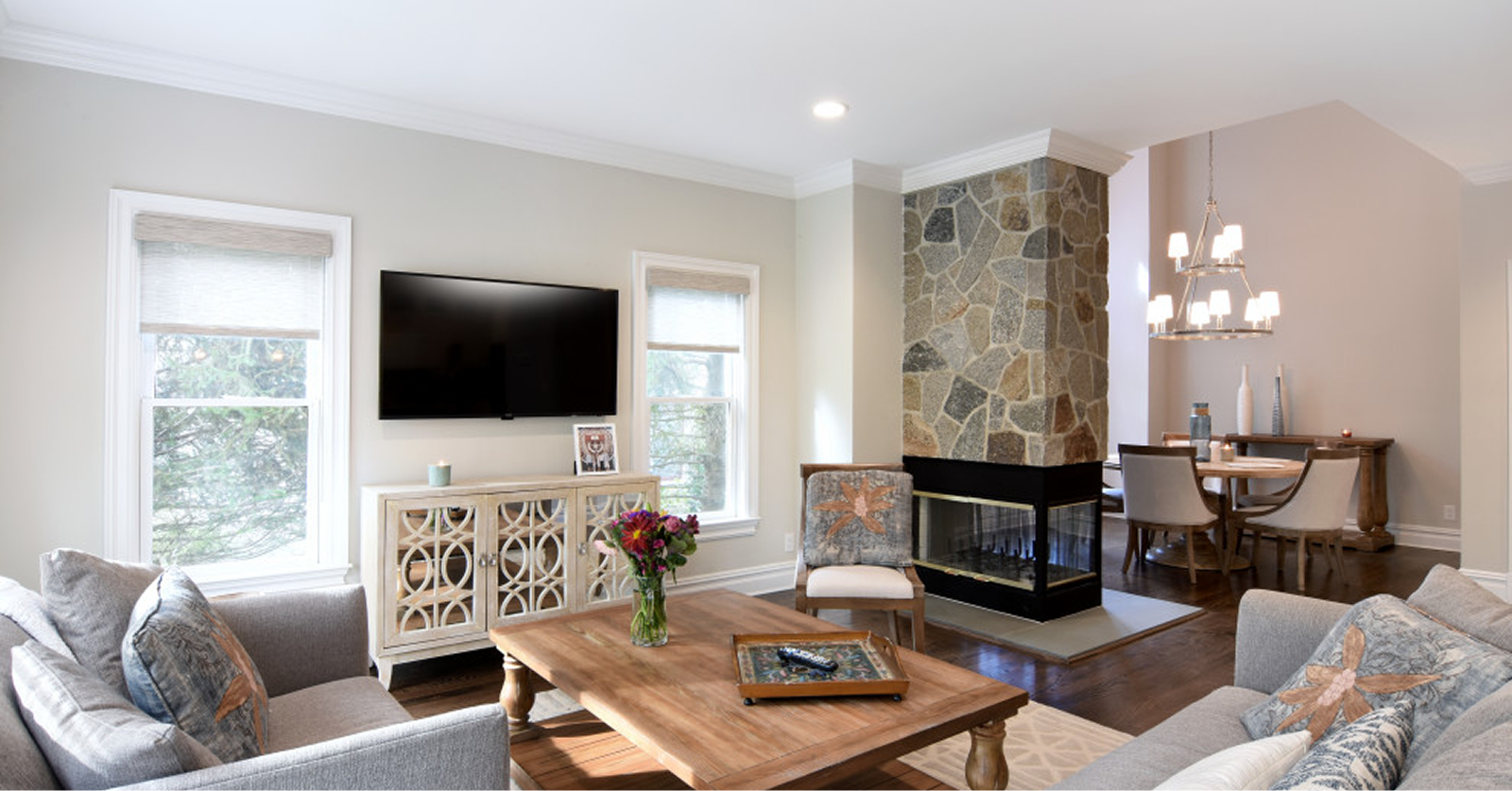
Whole home remodeling depends on tight sequencing because demolition, framing, rough-ins, drywall, and finish work must follow a clear order. Rivertown General Contracting phases work areas, confirms prerequisites before each trade begins, and schedules inspections early so the project does not stall at rough-ins, insulation, or closeout. Long lead items such as cabinetry, tile, windows, and fixtures are planned into the schedule so installation stays continuous once finishes start.
Consistent jobsite oversight keeps progress tied to real conditions. Field measurements are verified before fabrication, rough-in locations are confirmed with the trades, and deliveries are timed to site readiness so materials stay protected and crews stay productive. This level of supervision keeps handoffs clean between trades, reduces rework, and maintains steady progress through each phase of the remodel.
Finish work shows whether the remodel was managed with discipline, because small alignment issues become obvious at transitions and edges. Rivertown General Contracting supervises flooring installation, cabinetry set, tile layout, trim carpentry, paint preparation, and fixture placement so lines remain consistent and materials fit cleanly. Cabinetry is checked for level and alignment, doors and drawers are adjusted for smooth operation, and tile work is reviewed for balanced layout and clean edges.
Closeout stays organized when punch list items are tracked while trades remain active and access remains open. Hardware, doors, windows, plumbing fixtures, electrical devices, and ventilation are reviewed for fit and function, then corrections are completed before the final walkthrough. This approach keeps the final handoff straightforward and helps homeowners move into a finished space that feels complete.
Rivertown General Contracting leads home remodels in Fairfield County, CT, with clear planning, steady oversight, and a build sequence that keeps structural work, system upgrades, and finishes aligned. Homeowners choose our team because scope, permits, selections, and trade scheduling are managed as one coordinated process, which reduces confusion and protects both timeline and finish quality. With one general contractor accountable for the full project, communication stays consistent, and decisions stay connected to what is happening on site.
Remodeling gets complicated when the home does not match the drawings, which is common with older framing, past renovations, and mechanical lines that run in unexpected places. In Fairfield County, that often shows up as out-of-level floors, walls that are not perfectly straight, undersized framing at old openings, or plumbing and wiring that need to be rerouted to support the new plan. We get a head start on verifying those conditions, mapping out the necessary changes, and handling the installation specifics to ensure a seamless integration with the existing structure. Meticulous walkthroughs, careful inspection scheduling, and a well-defined closeout process all contribute to a confident, predictable project completion.
For homeowners expanding their living space, explore home additions in Fairfield County, CT.
Home remodels in Fairfield County, Connecticut, can differ significantly in scale and the time it takes to secure permits. A clear work sequence, along with early decisions, is essential for a predictable schedule, from the initial demolition to the final inspections.
Most home renovations necessitate permits. These cover everything from structural alterations and electrical work to plumbing modifications and inspections. A General Contractor manages these processes, ensuring that all approvals stay in sync with the construction schedule.
Home renovations often involve structural changes, like adding new openings, putting in beams, or changing the layout. These changes require careful planning and engineering to ensure they are safely integrated into the existing building.
A general contractor handles the overall project, overseeing everything from the initial scope of work and necessary permits to the scheduling of different trades and the required inspections. They also supervise the job site, ensuring that the remodel unfolds in the right sequence by coordinating both the rough-ins and the final finishes.
Well-planned remodeling can improve long-term value by correcting layout inefficiencies, updating systems, and delivering consistent finishes that appraisers and buyers recognize across the home.